Vishal Sharma
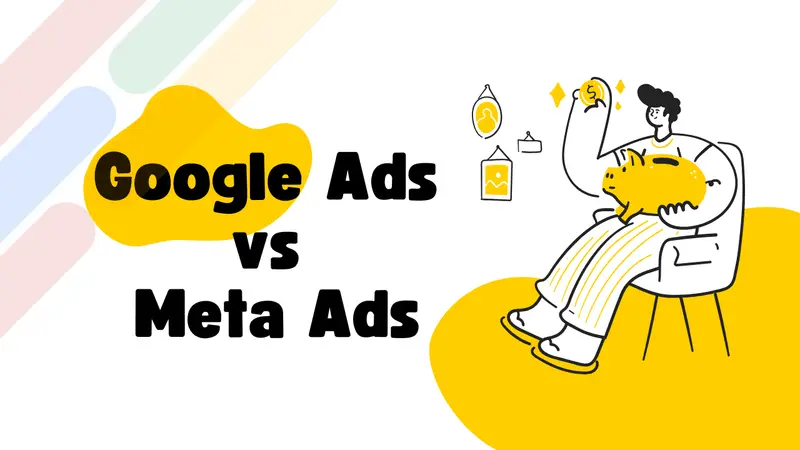
A common question we hear from local business owners is, “How should I split my ad budget between Google and Facebook/Instagram?”
Some people just guess, while others split it down the middle, 50/50. But the best way to decide is to think about how your customers actually shop.
Imagine yourself as either a hunter or a farmer.
Google Ads = The Hunter 🏹
Google is for catching people who are already looking for something specific. Google describes Search campaigns as a way to show ads to people actively searching for your products and services. For example, they might search for:
- “Emergency plumber Edmonton”
- “Best Edmonton IT company”
- “Dental clinic near me”
These searches show they need something right now. This is why clicks on Google might cost more, but they often lead to sales right away.
Meta Ads = The Farmer 🌱
Meta (which includes Facebook and Instagram) is about creating interest. Think of someone scrolling through Instagram and seeing an ad for a new gym or a cool coffee shop. They weren’t looking for it, but the ad made them interested.
Instead of keywords, Meta lets you narrow your audience by interests, location and demographics, so you can reach people who are likely to care about what you offer.
Meta helps you build brand awareness and loyalty over time.
Your Simple Guide to Ad Budgets 💡
- For service businesses (like plumbers, lawyers, or IT companies): Be a hunter. Spend about 70% on Google and 30% on Meta. You want to be found when people are looking for you.
- For lifestyle and retail brands (like restaurants, boutiques, or gyms): Be a farmer. Spend about 70% on Meta and 30% on Google. Focus on telling your story and showing off your products.
- For online stores (e-commerce): You’re both. Start with a 50/50 split.
- For expensive items (like furniture), lean more toward Google.
- For lower-cost, visual products (like jewelry or clothes), lean more toward Meta.
Stop Guessing, Start Testing
There’s no one-size-fits-all solution, but this framework is a great place to start. Pay attention to what the data tells you. Both platforms have built-in testing tools: Google Ads custom experiments let you test a change against your original campaign before applying it, and Meta’s A/B testing tool runs two versions of your ads to find a winner. Your results depend on what your customers are thinking, not just which platform is popular.
Frequently asked questions
Is Google Ads or Meta Ads better for a local service business?
For most service businesses, Google Ads is the better starting point because Search ads reach people actively searching for what you offer, like an emergency plumber or an IT company. Meta Ads work better for creating interest in lifestyle and retail brands. Many local businesses use both, with more budget going to the platform that matches how their customers shop.
How should I split my ad budget between Google and Facebook?
A practical starting point is about 70% Google and 30% Meta for service businesses, the reverse for lifestyle and retail brands, and 50/50 for online stores. Treat these splits as a starting framework, not a rule. Track leads and sales from each platform, then shift budget toward whichever one brings in customers at a lower cost.
How long should I test a new ad budget split?
Give it a few weeks rather than a few days. Meta recommends running A/B tests for at least two weeks and up to 30 days, and Google says bid strategy learning typically lasts about seven days, during which you should avoid making changes. Judging results after one week can lead you to cut a campaign that hadn’t settled yet.
Can I A/B test ads on Google Ads and Meta?
Yes. Google Ads custom experiments let you test a change against your original campaign, splitting traffic and budget, and apply the winner when you’re ready. Meta’s A/B testing tool runs two versions of your ads and picks a winner based on results. Test one change at a time so you know what actually made the difference.
Your Next Step
Think about your main product or service. Ask yourself: “Are my customers in Edmonton actively looking for me, or do I need to show them why they need me?”
Try adjusting your ad spending to a 70/30 or 50/50 split for a week and see what happens.
Update (November 2026): One week is usually too short to judge results. Meta recommends keeping A/B tests running for at least 2 weeks and up to 30 days, and Google notes that bid strategy learning typically lasts about 7 days, so give any new split a few weeks before deciding.