
AEO & GEO · Edmonton & across Canada
AI Search Optimization (AEO & GEO) in Edmonton
When someone asks ChatGPT, Google’s AI Overviews, Copilot or Perplexity “who should I call for this?”, the answer names a few businesses. AI search optimization helps make yours one of them. AI crawlers can reach your site. Your pages answer questions clearly. And other websites back up what you say about yourself.
Part of our SEO services · done by an IT team that can fix what blocks AI crawlers
- No guaranteed-ranking promises
- Built on Google’s own guidance
- Plain-English monthly reports
Where AI answers come from
● What we check
Google AI Overviews & AI Mode
Google index
ChatGPT search
OAI-SearchBot
Microsoft Copilot
Bing index
Perplexity
PerplexityBot
Local “near me” answers
Business listings
29,000 AI appearances
For a client site in under 6 months, measured in Search Console
131 visits from ChatGPT
Real visitors to the same client site, tracked in Google Analytics 4
IT team, not just marketers
Firewalls, CDNs and hosting fixed directly
Honest about limits
Nobody controls what an AI model says
SEO vs AEO vs GEO
What AEO and GEO Mean, and How They Differ From SEO
Three names, one goal: be the business people find when they search. The difference is where the answer appears and who writes it. With SEO, you write the page and Google lists it. With AEO and GEO, an AI reads your page and other sites, then writes its own answer.
SEO: search engine optimization
Gets your pages ranked in the normal list of Google and Bing results. Success is a click to your site. Still the base for everything else on this page.
AEO: answer engine optimization
Shapes your content so search engines and voice assistants can use it as a direct answer. Think a short, clear reply near the top of a page, and FAQs that match how people actually ask.
GEO: generative engine optimization
Some AI tools write their own answers: ChatGPT, Gemini, Copilot and Perplexity. GEO helps them understand your business, trust it and cite it.
Side by side
| SEO | AEO | GEO | |
|---|---|---|---|
| Where you show up | Blue links and the map pack | Featured snippets, “People also ask”, voice answers | AI Overviews, AI Mode, ChatGPT, Copilot, Perplexity |
| What wins | Relevance, links, page quality | Direct answers, clear structure | Clear facts, consistent details, mentions on other sites |
| What a win looks like | A click to your website | Your answer shown, often with a link | Your business named or cited in the AI’s answer |
| How it’s measured | Search Console, rankings, leads | Snippet and question tracking | AI reports in Search Console and Bing, AI referrals in GA4 |
In practice they overlap so much that we don’t sell them separately. A page that is fast, crawlable and answers the question well does all three jobs at once.
How it works
How an AI Answer Picks a Business, in Five Steps
Every AI search tool works a little differently, but the path from your website to a recommendation looks roughly like this. A business can drop out at any step.
Step 1 of 5
Crawl
Googlebot, Bingbot, OAI-SearchBot and PerplexityBot read your pages, if your site lets them in.
Out if: a firewall, CDN or robots.txt blocks the crawler.
Step 2 of 5
Index
Readable pages are stored in a search index. Google only links pages that are indexed and allowed a snippet.
Out if: the page isn’t indexed, or key facts sit in images and PDFs.
Step 3 of 5
Fan out
The AI turns one question into several related searches, such as price, area, reviews and alternatives.
Out if: you have no page that answers those smaller questions.
Step 4 of 5
Pick sources
It keeps the passages that answer clearly and that other sources agree with.
Out if: your pages are vague, or your details differ from site to site.
Step 5 of 5
Answer & cite
It writes the answer, names a few businesses and links the pages it relied on.
Out if: nobody else mentions you, so there’s little to confirm you.
Steps 1 to 3 come from Google’s, OpenAI’s and Perplexity’s own documentation. Step 4 is our reading of how the tools behave, since none of them publish their selection rules.
Why AI tools leave a business out
Six Reasons ChatGPT and Google’s AI Don’t Mention You
When we check a business that never shows up in AI answers, the cause is usually one of these. Most are fixable in weeks, and a few are plain technical faults that an SEO report flags but nobody fixes.
AI crawlers are blocked
A firewall, CDN or “block AI bots” setting can stop OAI-SearchBot or PerplexityBot from ever reading your site. Google lists crawl access “by any CDN or hosting infrastructure” as a basic requirement.
The answers are hidden
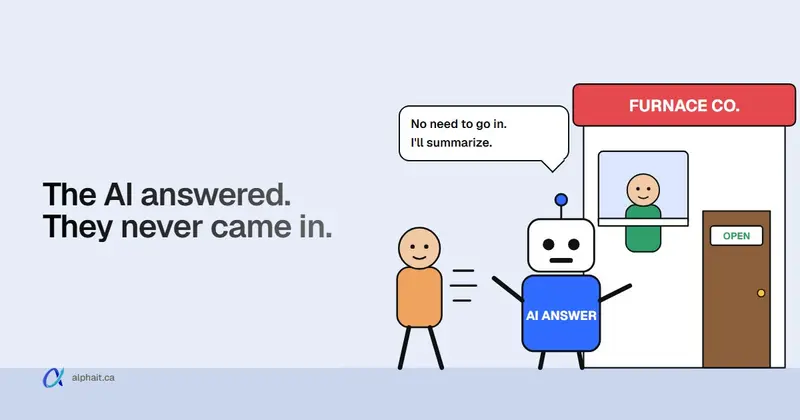
Prices, service areas and hours sit inside images, PDFs, sliders or text that only loads with JavaScript. AI systems mostly read plain text on the page.
Pages don’t answer anything
A service page that says “quality solutions for all your needs” gives an AI nothing to quote. A page that says what you do, where, for whom and roughly what it costs does.
Your details don’t match
Your name, address or phone number differs between your website, Google, Bing and directories. That makes it hard for any system to tell which business is which.
Nobody else mentions you
AI answers lean on reviews, directories, local news and industry sites. A business that only talks about itself on its own site is easy to skip.
Missing outside Google
Copilot uses Bing, and ChatGPT now has its own business listings. A business that only ever looked at Google can be invisible in both.
What’s included
Our AEO and GEO Services
Everything below is built on normal SEO foundations. That’s deliberate: Google says there are no special optimizations needed for its AI features, and the other AI tools reward the same things.
AI crawler access audit
We check your robots.txt, CDN, firewall and hosting rules for Googlebot, Bingbot, OAI-SearchBot and PerplexityBot, then fix what’s blocked. You choose whether training bots like GPTBot are allowed.
Answer-first page rewrites
Service and location pages rewritten so the first lines answer the main question in plain words. The details people and AI tools look for come next.
FAQs from real questions
Questions from your calls, emails, Search Console and “People also ask”. Each is answered on the page it belongs to, not dumped on one FAQ page.
Structured data that matches
Schema markup for your business, services, FAQs and articles, checked so it matches what’s visible on the page, which is what Google asks for.
Listings and business facts
Google Business Profile, Bing Places, Apple Business Connect and ChatGPT’s Business Hub claimed and kept consistent with your website.
Bing and IndexNow
Your site verified in Bing Webmaster Tools and new pages pushed through IndexNow, so Copilot and other Bing-powered tools see changes within days.
Mentions on other sites
Reviews, local directories, partner pages and industry listings that confirm who you are. No bought links and no fake reviews.
Technical fixes, done directly
Speed, rendering, redirects, SSL and hosting problems fixed by our IT team rather than handed to you as a to-do list.
AI visibility tracking
AI appearances in Search Console, Copilot citations in Bing, and AI visits in GA4. Plus a fixed set of buyer questions we check by hand each month.
Straight from the platforms
What Google, OpenAI, Microsoft and Perplexity Actually Say
Google: to be shown as a link in AI Overviews or AI Mode, a page “must be indexed and eligible to be shown in Google Search with a snippet.” Google says there are no extra requirements. No special schema and no new “AI text files” are needed, and structured data should match the visible text. Its AI features can also run several related searches at once (“query fan-out”). That’s why one strong page per service beats one thin page per keyword.
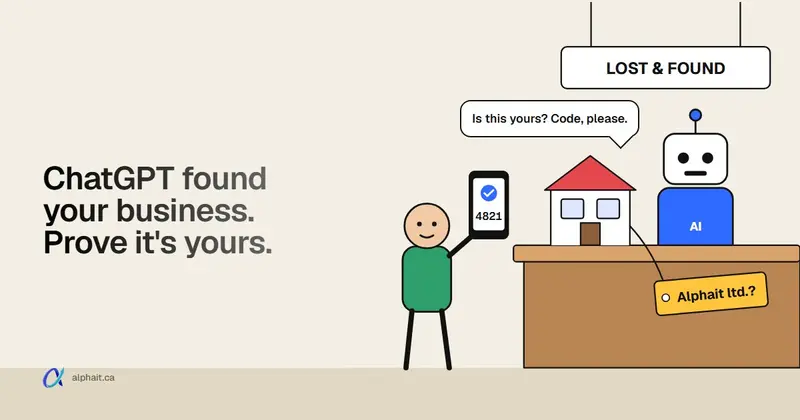
OpenAI: ChatGPT search uses a crawler called OAI-SearchBot, and OpenAI recommends allowing it in robots.txt if you want to appear. Its training crawler, GPTBot, is separate, so you can block training and still be found. Businesses can also claim a free profile in ChatGPT; we walked through claiming our own listing step by step.
Microsoft: Copilot answers draw on Bing. Bing Webmaster Tools now has an AI Performance report that counts how often Copilot and Bing’s AI summaries cite your pages. It doesn’t show clicks yet.
Perplexity: PerplexityBot is used to list and link websites in Perplexity’s answers, not to train models. Perplexity recommends allowing it in robots.txt, and allowing its published IP ranges if you run a firewall.
What we won’t sell you
- A guarantee that ChatGPT will recommend you
- Hundreds of AI-written pages for every keyword
- Fake reviews or paid “best of” list placements
- llms.txt as a ranking trick (Google doesn’t use it)
- Hidden text or prompts aimed at AI crawlers
- Reports full of “AI visibility scores” with no leads
Google’s spam policies apply to AI features too. Shortcuts that work this month tend to get a site demoted later.
Case study · Cheveuderm clinic
From a New Website to 29,000 Appearances in Google’s AI Answers
We built Cheveuderm’s website in early 2026 and did SEO, AEO and GEO together from launch day. When Search Console began reporting Google’s AI features in May 2026, its pages were appearing in AI answers about 50 times a day. By October that was about 300 a day, and 29,000 in total.
ChatGPT also started sending real patients. Google Analytics 4 counted 131 visits from ChatGPT, and those visitors engaged with the site about as much as everyone else. None of it came from tricks: answer-first pages, FAQs built from real patient questions, matching structured data and a site that’s easy to crawl.
Results, Jan to Oct 2026
- 29,000 appearances in Google’s AI answers
- 131 visits from ChatGPT
- 1,670 clicks from Google Search
- Clicks up 103% in the last 3 months
Source: the client’s Google Search Console and Google Analytics 4. Results depend on your market and competition.
How we measure it
How You’ll Know if AI Tools Are Mentioning You
There’s no single dashboard for AI visibility yet, and anyone who shows you one number is guessing. We combine the reports the platforms provide with checks we run ourselves.
Google Search Console
How often your pages appear in AI Overviews and AI Mode, alongside your normal clicks and the searches behind them.
Bing Webmaster Tools
How often Copilot and Bing’s AI answers cite your pages, and for which questions.
Google Analytics 4
Visits and leads from ChatGPT, Perplexity, Copilot and Gemini, kept apart from normal search traffic.
ChatGPT Business Hub
Once your listing is claimed, OpenAI shows mentions, website clicks and the topics people asked about.
Monthly question checks
The 10 to 20 questions your buyers ask, run in ChatGPT, Gemini, Copilot and Perplexity, with who got named each time.
Calls and form leads
The number that pays for the work. AI visibility that never turns into enquiries isn’t a win.
How we work
From First Check to Being Cited
Most businesses already have some of the foundations. We start by finding out which.
Step 1
AI visibility check
We ask the AI tools your buyers’ questions, check crawler access and listings, and show you who gets named today.
Step 2
Fix the foundations
Crawler blocks, indexing problems, speed, structured data and mismatched business details come first.
Step 3
Content and mentions
Answer-first rewrites of your key pages, new FAQs, then listings, reviews and mentions on other sites.
Step 4
Track and expand
Monthly reports on AI appearances, citations and leads, and the next questions to win.
Keep reading
Guides on AI Search for Small Businesses
Want to try some of this yourself first? These posts walk through it.
How to claim your business on ChatGPT
Every screen of the Business Hub claim, how verification works in Canada, and the ad credit catch.
Google AI Mode and your website
What to change on your service pages and Business Profile now that AI answers send fewer clicks.
How to improve your website’s SEO
The SEO basics every AI answer still depends on, step by step.
Google Business Profile checklist
A free checklist for the listing AI tools read when they answer local questions.
Free SEO analyzer
Check any page’s title, headings, schema and speed in under a minute.
Free vs paid SEO tools
Which tools are worth paying for, including the free ones Google and Bing give you.
Frequently asked questions
AEO and GEO FAQs
Straight answers about AI search, ChatGPT and what’s worth doing.
What is AEO (answer engine optimization)?
AEO is the work of shaping your content so search engines and voice assistants can use it as a direct answer. In practice: a short, clear answer near the top of each page, headings that match real questions, and FAQs in your customers’ words.
What is GEO (generative engine optimization)?
GEO aims to get your business named or cited in answers that AI tools write, such as ChatGPT, Gemini, Copilot, Perplexity and Google’s AI Overviews. It covers crawler access, clear facts about your business, consistent listings, and mentions on other trusted websites.
What’s the difference between AEO, GEO and SEO?
SEO gets your pages ranked in normal search results. AEO gets your content shown as a direct answer. GEO gets your business named in AI-written answers. They share the same foundations, so we do them together as part of our SEO work.
Is GEO replacing SEO?
No. Google says its AI Overviews and AI Mode use the same foundations as normal search. Pages must be indexed to be shown as a link. ChatGPT and Copilot also rely on search indexes. Good SEO is the starting point for being cited by AI.
Can you guarantee ChatGPT or Google’s AI will recommend my business?
No, and no one honestly can. AI answers change from one question to the next and from one day to the next. We can make sure AI tools can read your site, understand what you do and find others confirming it, and we report what changes.
Do I need an llms.txt file?
It isn’t needed for Google. Google says you don’t need new machine-readable files or AI text files to appear in its AI features, and Google Search doesn’t use llms.txt. It costs little to add one, so we do on request, but it isn’t a ranking factor.
Should I block AI crawlers like GPTBot?
That’s your choice, and you can split it. GPTBot collects data for training OpenAI’s models, while OAI-SearchBot decides whether you can appear in ChatGPT search. Many businesses block training and allow search. Blocking the search crawlers removes you from those answers.
How do I check if ChatGPT mentions my business?
Ask it the questions your customers ask, such as “best IT company in Edmonton for a dental office”, with search turned on. Note who it names and which sites it cites. Claiming your free ChatGPT business listing also gives you basic mention and click numbers.
How long does AI search optimization take?
Crawler and listing fixes can show up within weeks. Content changes and mentions on other sites take months, much like SEO. For Cheveuderm, AI appearances grew from about 50 to 300 a day over five months.
How much does AEO and GEO cost?
It’s included in our SEO plans rather than sold as a separate add-on. Pricing depends on your competition, locations and how much content and technical work your site needs. After a free consultation you get a written proposal, and SEO plans have a 6-month minimum.
Does structured data help with AI answers?
It helps search engines understand your page, but Google says there’s no special schema needed for AI features. What matters is that the markup is accurate and matches what’s visible on the page. Markup that claims things the page doesn’t show can hurt.
Do you work with businesses outside Edmonton?
Yes. We’re based in Edmonton and work with businesses across Canada, and our case study client is in India. AI answers for local questions still lean heavily on location, so we pay extra attention to your listings in each city you serve.
From the blog
Related articles on AI Search Optimization (AEO & GEO)
-
 SEO
Google AI Mode and Your Small Business Website: What to Change Now
AI answers in Google send fewer clicks to websites, but searches for someone to hire hold up better than how-to questions. Here's what a local service business should change on its website and Google Business Profile, and what to skip.
-
 SEO
How to Claim Your Business on ChatGPT: Step-by-Step (We Did It in Canada)
ChatGPT now lets businesses claim a profile, a bit like a Google Business Profile. We claimed ours in Edmonton on November 14, 2026. Here's every screen, what worked in Canada, what didn't, and the catch in the $500 ad credit.
Free AI visibility check
Find Out What ChatGPT and Google’s AI Say About Your Business
We’ll ask the AI tools your customers’ questions and check whether their crawlers can reach your site. Then we review your listings and show you the biggest gaps. No obligation.
780-318-0149
Edmonton, AB · serving businesses across Canada